
Article Contents:
- Can you grow Amanita muscaria
- How does Amanita grow?
- The 3 types of mushrooms.
- What type of mushroom is Amanita?
- Can I buy an Amanita grow kit?
- Have people tried to grow amanita muscaria?
- So if you can't grow them, where can you find them?
- Where can I find Amanita in the wild?
TL;DR: Can You Grow Amanita Muscaria?
No. Unlike Oyster, Lion's Mane or Psilocybe mushrooms, Amanita muscaria is ectomycorrhizal, meaning it requires a symbiotic relationship with living tree roots (like Pine or Birch) to fruit. It cannot be grown in bags, tubs, or indoor kits.
How does Amanita grow?
Though often confused with magic mushrooms, Amanita muscaria grows in an entirely different way. While psilocybin mushrooms can be cultivated at home with a tub and the right substrate, Amanita cannot.
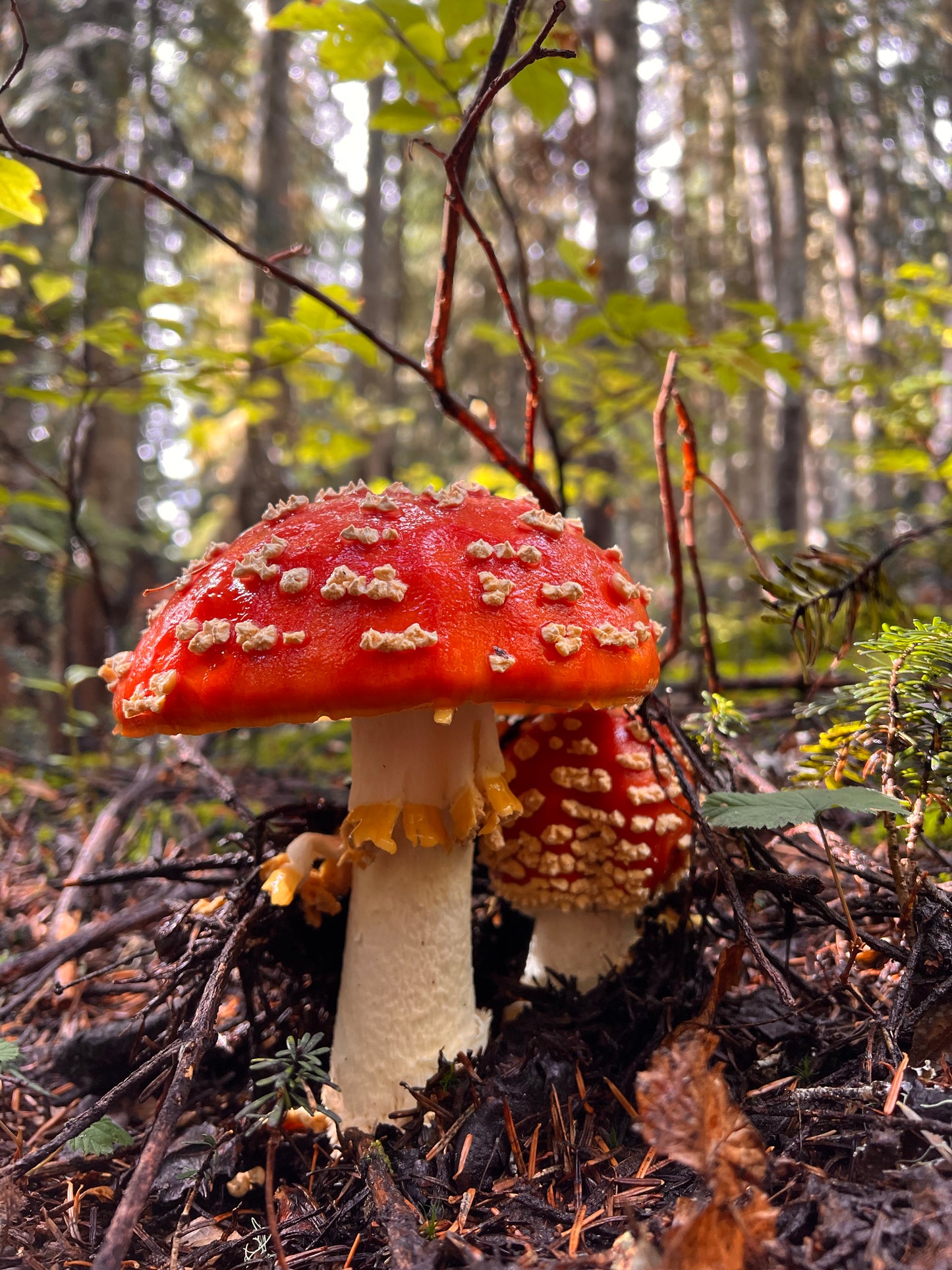
Amanita mushrooms form a deep symbiotic relationship with trees, primarily birch, pine & fir though she keeps company with many other species as well. Without a living host tree to accept the mycelium into their root system, Amanita mushroom will simply not fruit. No tree, no mushroom.
To understand why psilocybin mushrooms can be grown at home, which Amanita mushrooms cannot, it helps to understand that there are three types of mushrooms, each with different needs to grow properly.
The 3 Types of Mushrooms
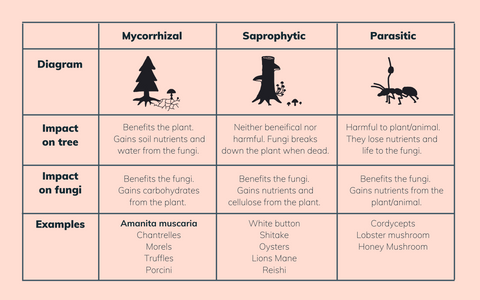
Not all mushrooms grow the same way. These are the three distinct categories of fungi:
1. Saprophytic Mushrooms
These are decomposer mushrooms.
They grow on dead trees or wood chips and release enzymes or acids to break down organic matter into nutrients. Because they don't need a living host, they are easy to cultivate. Provide these mushrooms with substrate, moisture and fresh air, and these mushrooms can easily be grown at home.
Ex: Most of the mushrooms you find in grocery, like white button, shiitake, oyster, portobello, are saprophytic.
2. Mycorrhizal Mushrooms
These mushrooms form symbiotic relationships with living plants, called symbionts.
The mycelium grows either inside (endomycorrhizal) or outside (ectomycorrhizal) the roots of a host plant (usually a tree). The mycelium receives sugars from the tree and in return, it delivers nutrients (like nitrogen and phosphorus) that the tree can’t access on its own. Without this partnership, the mushroom is not able to access the needed carbohydrates to fruit.
Ex: Chanterelles, truffles, and porcini, and Amanita muscaria.
3. Parasitic Mushrooms
These mushrooms take advantage of host organisms.
Parasitic fungi latch onto a host and "steal" nutrients from them without giving anything in return. They are the least common form of fungi in nature.
Ex: One of the most well known examples of a parasitic fungi is Cordyceps, which infects insects and hijacks their behavior to spread spores. Once their spores inoculate an insect, it grows fibrils along the insect's skeleton and force them to climb to the top of a plant to die, where it can then spread it spores to the next host.
What type of mushroom is Amanita?
Amanita muscaria is an ectomycorrhizal mushroom, the most complex and interdependent category of all. She specifically favors birch and pine, though she’s been found forming relationships with almost every variety of tree including spruce, fir, cedar, and many species depending on the region.
This is also why Amanita muscaria cannot be commercially farmed. You can’t manufacture the relationship she has with trees and you can't force trees to accept Amanita mycelium on their roots. It takes decades, sometimes centuries for these relationships to form.
Can I buy an Amanita Muscaria Grow Kit?
| Buyer Beware! |
No. There is no reliable sellers for Amanita muscaria grow kits, and any product marketed as one should be approached with serious skepticism.
Standard grow kits work by inoculating grain, sawdust, or straw with mycelium, substrates that saprophytic mushrooms thrive on. Amanita muscaria mycelium has no use for any of these. Without the sugars or chemistry of living tree roots, the mycelium has no signal to develop into a fruiting body.
Lab attempts have successfully grown Amanita mycelium on agar plates. But no one has yet been able to get that mycelium to push up a mushroom outside of a forest setting. The gap between “mycelium alive in a petri dish” and “mushroom fruiting in the wild” remains unbridged.
Have People Tried to Grow Amanita Muscaria?
Yes, and their attempts offer useful lessons.
Lab cultivation attempts
Researchers have cultured Amanita mycelium on agar with some success. The mycelium grows rhizomorphically (in branching, root-like patterns) and appears healthy, but to get the mushroom to fruit (create a mushroom, which is where the medicinal compounds live) requires environmental and biological cues that a lab cannot replicate. Crucially, the presence of a compatible host root is needed for this to occur.
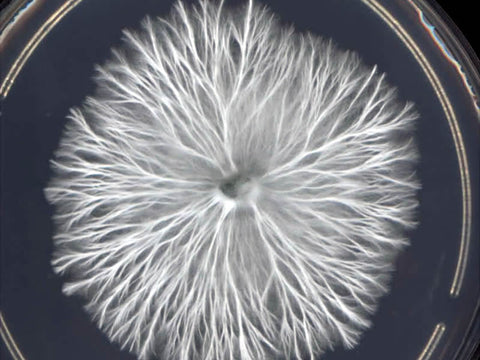
credit: Funguys gourmet
Backyard inoculation attempts
Some growers have experimented with introducing Amanita spores to the base of birch or pine trees, hoping the mycelium will be accepted into the root system. Results are anecdotal and inconsistent. Even in ideal conditions, mycorrhizal relationships take years to establish — and there’s no guarantee the tree will accept the inoculation.
Learning from other mycorrhizal mushrooms
Truffles are also mycorrhizal, and European farmers have developed a method of sprouting oak seedlings in truffle-spore-infused water before planting them out. It works, but it takes a minimum of 5 years before the first harvest, and success rates remain unpredictable. No equivalent method has been developed for Amanita muscaria, and the timelines would be similarly long, if not
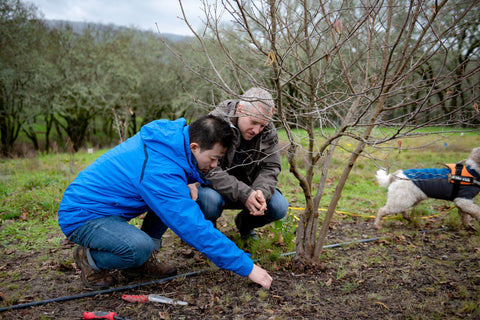
credit: American Truffle Company
Chanterelles are also mycorrhizal and growers have tried pouring mushroom-rinse water at the base of pine trees over many years, with a small number claiming success. So this is a path worth exploring for large tree farms, particularly pine farms, but it has not been attempted with Amanita.
The honest conclusion: growing Amanita muscaria is a decades-long project with no guaranteed outcome. The door is open for patient, dedicated experimenters, but it’s not a realistic path for anyone seeking a consistent, or immediate, supply.
So if you can't grow them, where can you find them?
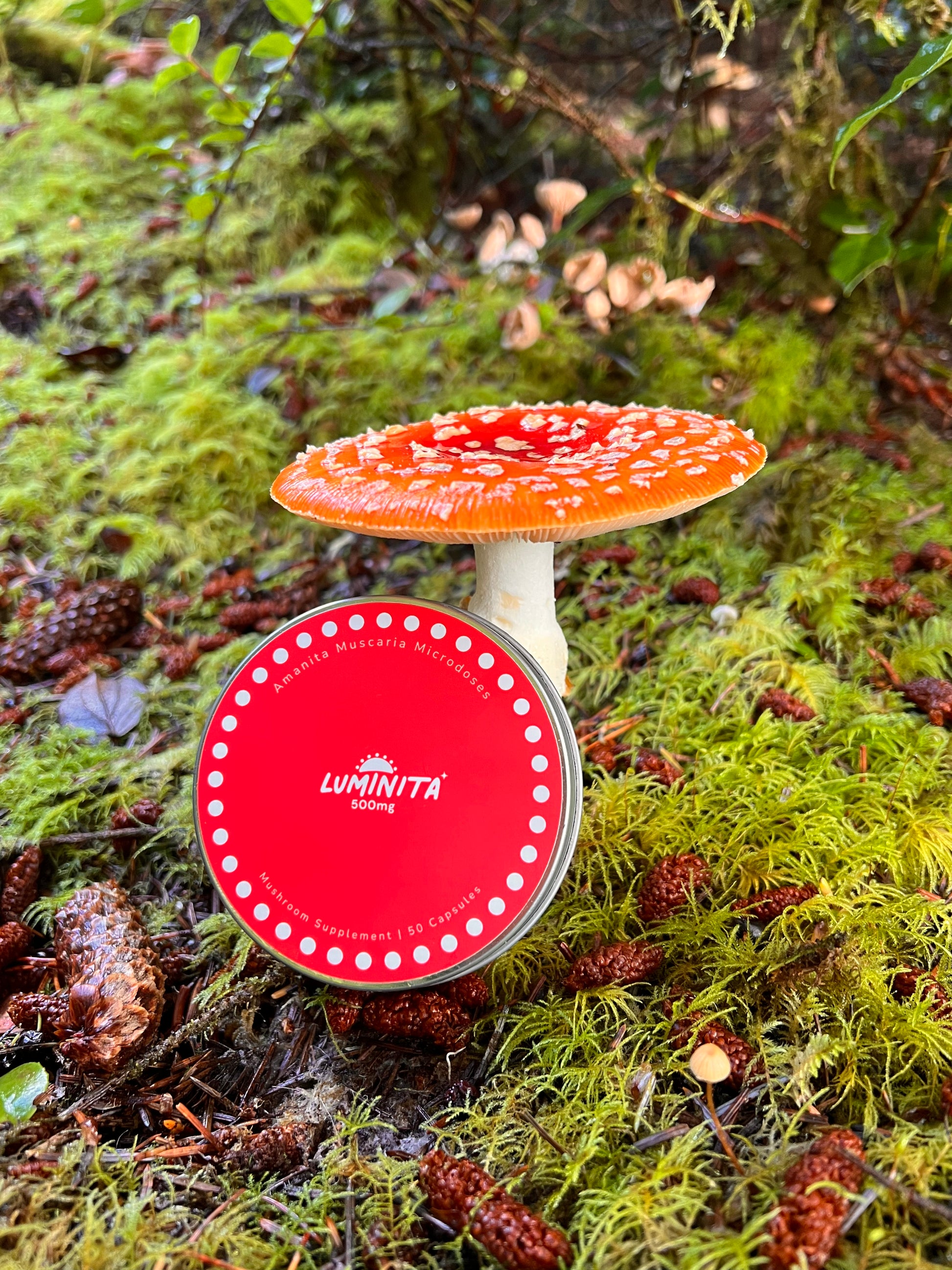
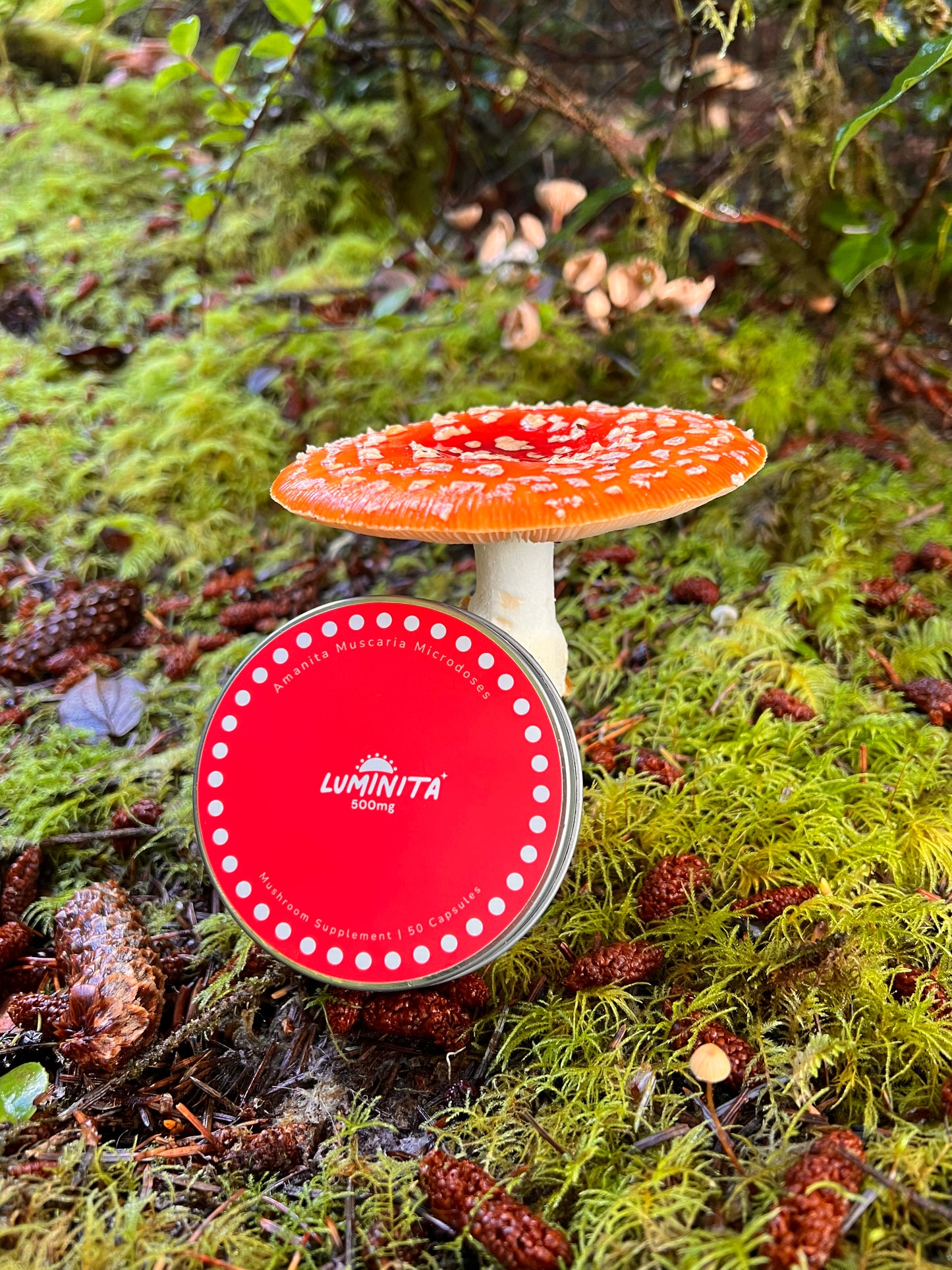
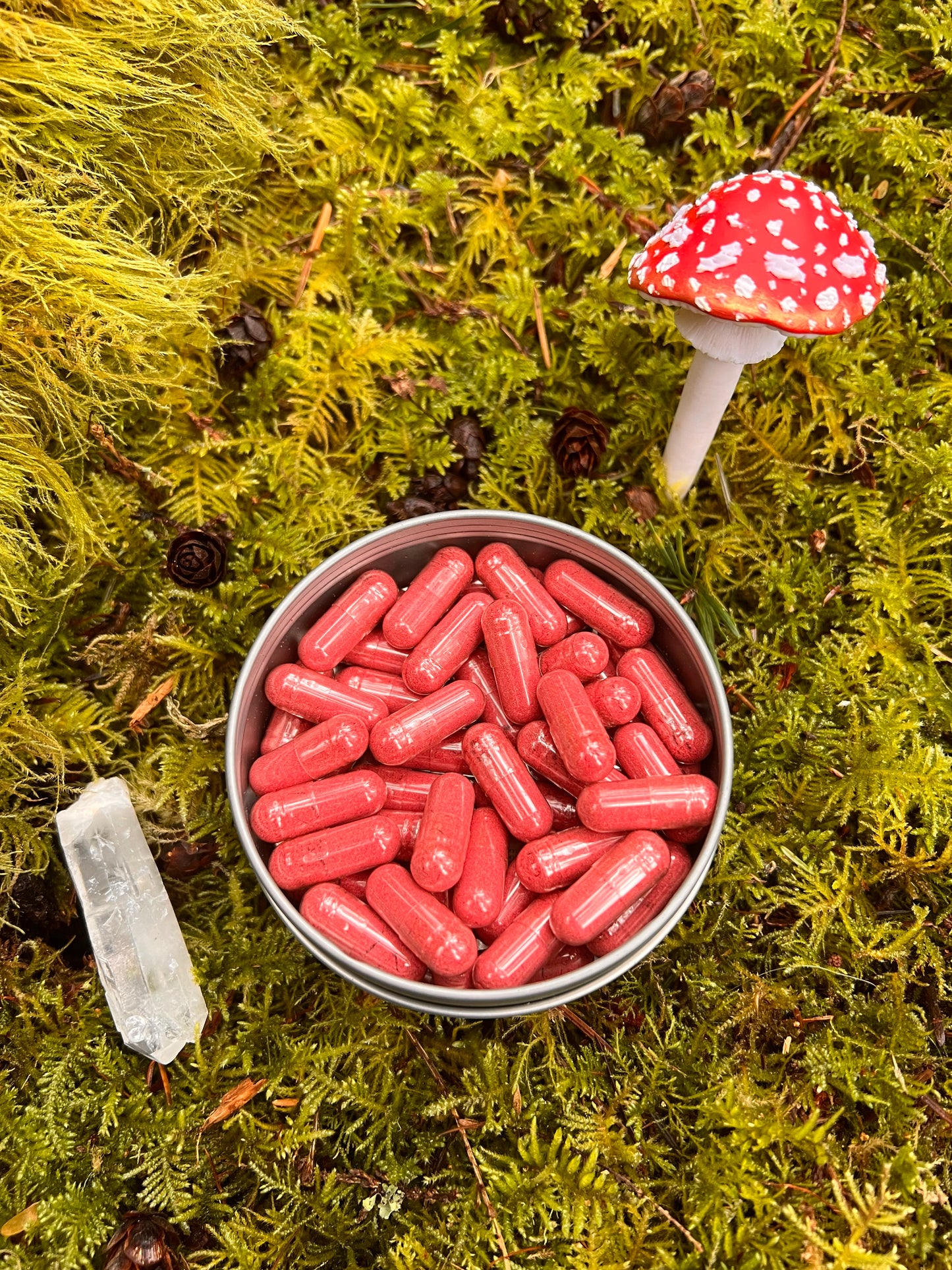
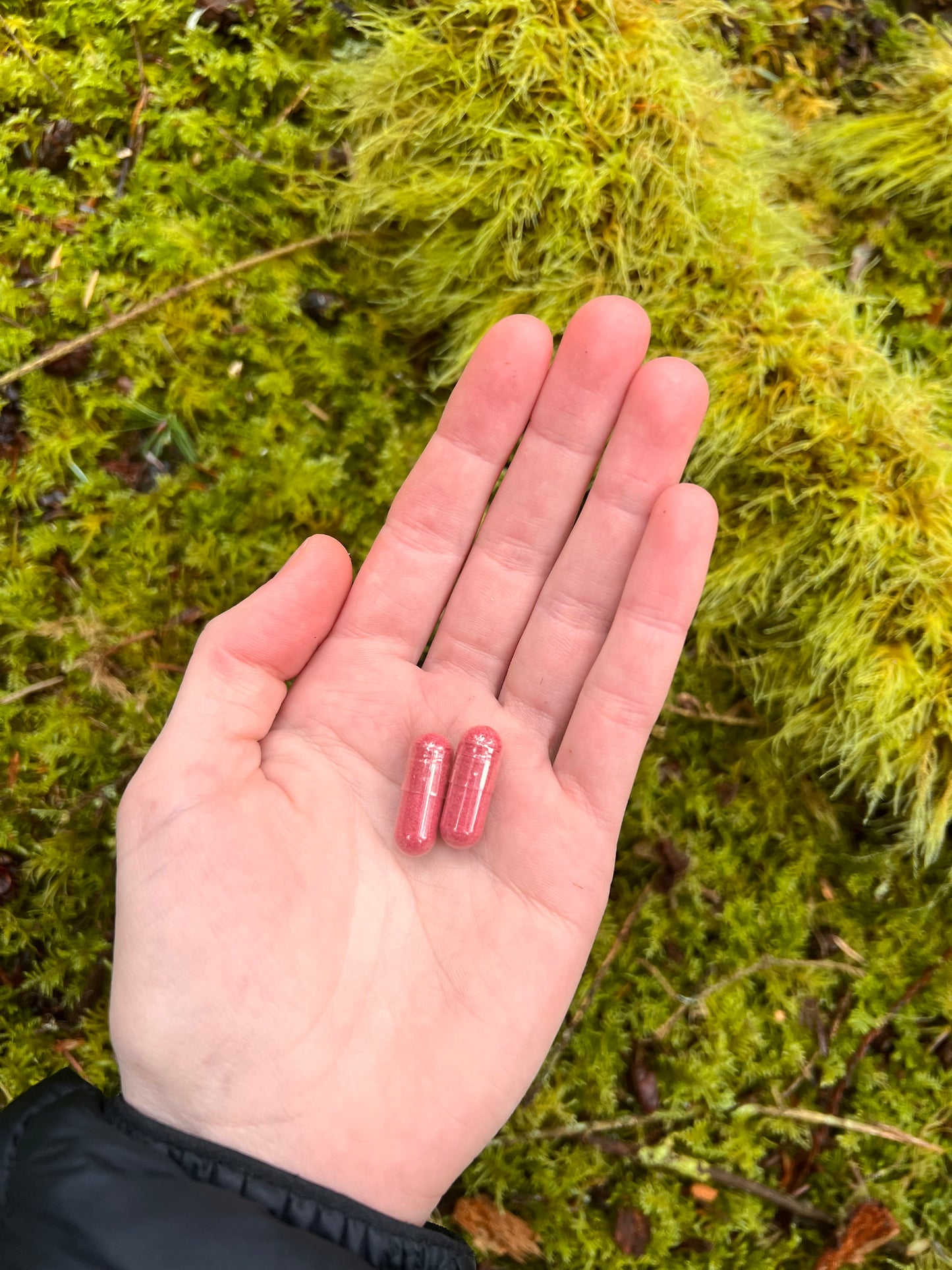
There are no shortcuts here. Each mushroom is picked by hand during the foraging season, dried within hours of harvest, and slowly decarboxylated [Read more about Decarboxylation here] to convert ibotenic acid into muscimol. The result is a consistent, precision-crafted microdose that reflects the full intelligence of the mushroom — not a compromised extract or lab-grown imitation.
This is actually one of the things that makes Amanita so special. She cannot be industrialized. She remains wild, seasonal, and deeply connected to the land she grows in. Working with her means working within her terms, and for me personally, I think that is a relationship worth keeping.
Where Can You Find Amanita Muscaria in the Wild?
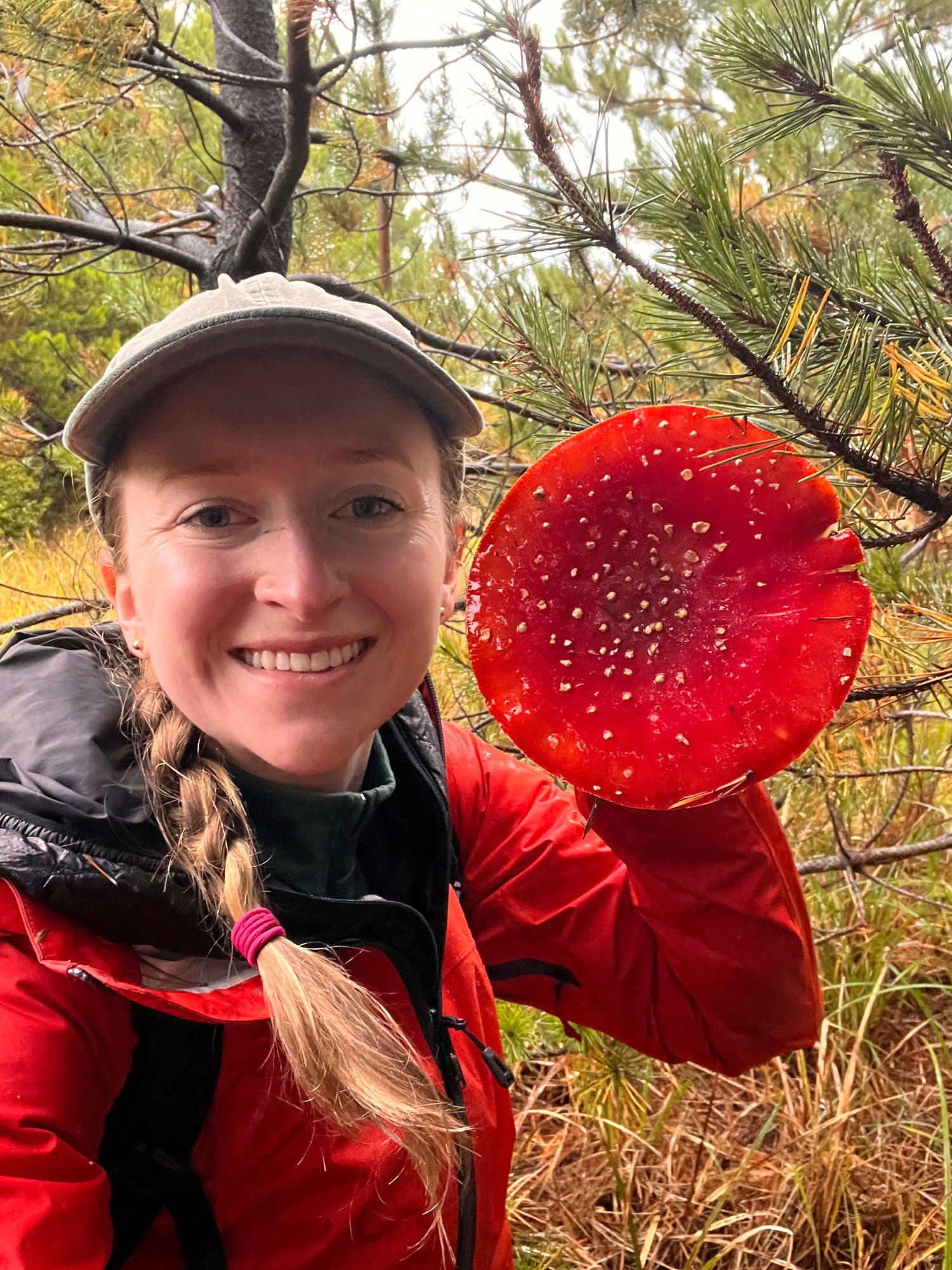
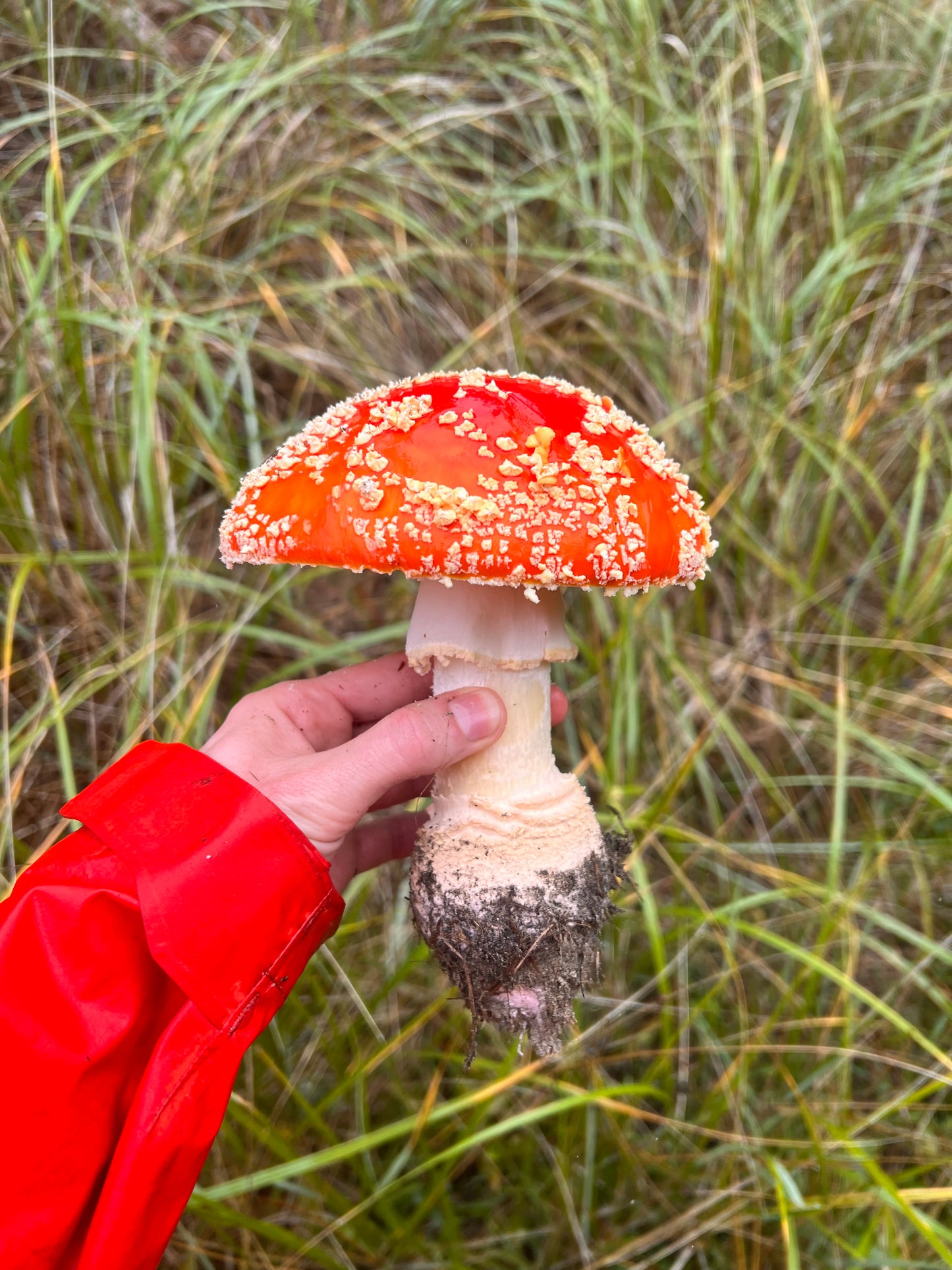
If you’d rather forage than buy, Amanita muscaria is found throughout forests across the Northern Hemisphere, particularly in regions with birch, pine & fir. In the Pacific Northwest, she emerges reliably in late summer through early winter, often appearing in clusters at the base of conifers.
Read our guide [Where Does Amanita Muscaria Grow?] for a detailed breakdown of regions, seasons, and what to look for.
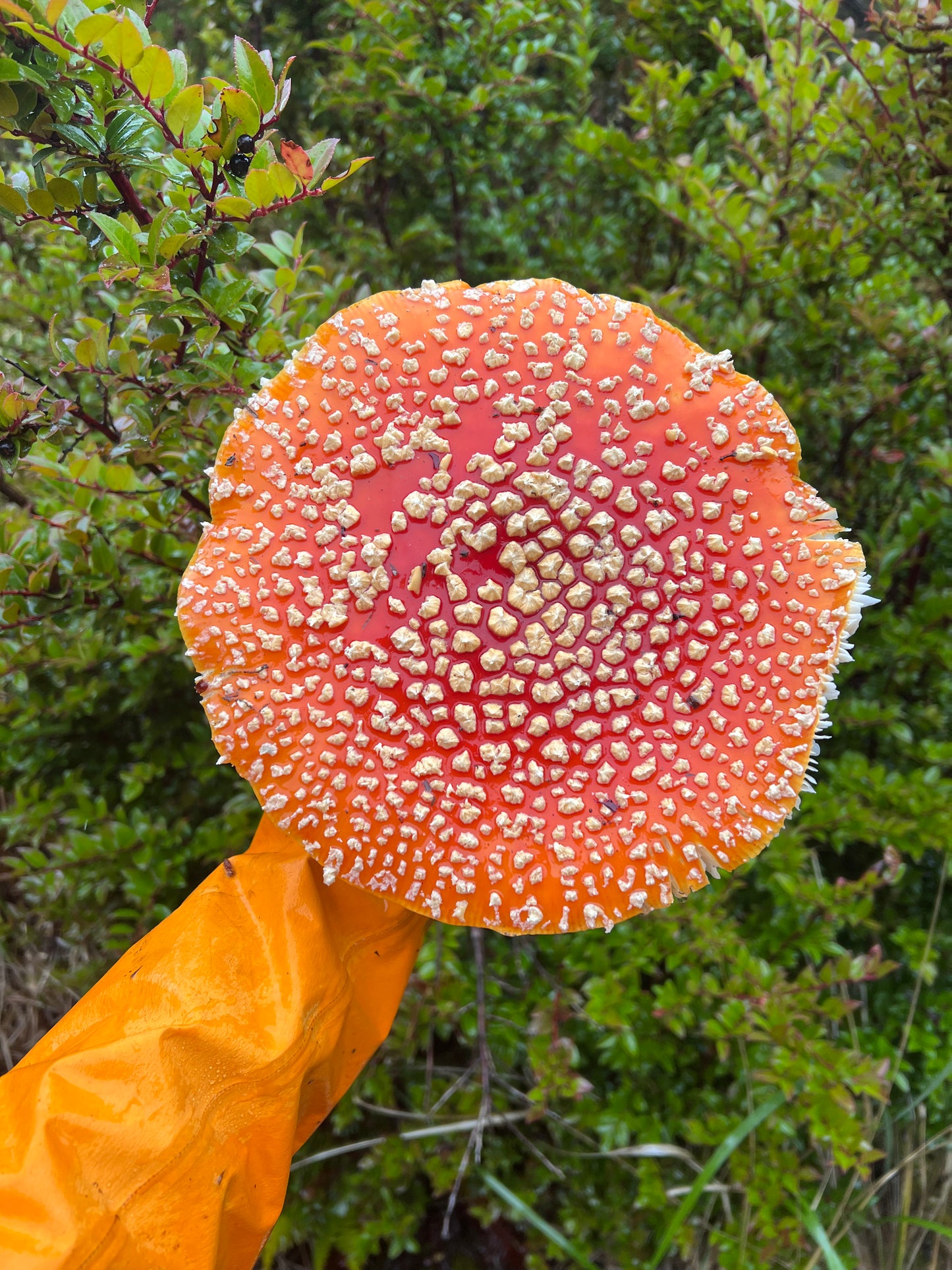
A word of caution: proper identification is essential before consuming any wild mushroom. Amanita muscaria is visually distinctive, but she has lookalikes. If you’re new to foraging, start with education before you start with a basket.
Frequently Asked Questions
Can you grow Amanita muscaria indoors?
No. Amanita muscaria requires a living tree root system to fruit. Indoor cultivation without a host tree is not currently possible.
Is there an Amanita muscaria grow kit?
No legitimate grow kit exists for Amanita muscaria. Any product marketed as such is most likely not able deliver on its claims given the current state of mycological knowledge.
How long does it take to grow Amanita muscaria?
Even in optimal outdoor conditions with a suitable host tree, establishing the mycorrhizal relationship takes many years before fruiting occurs, if it occurs at all.
Why can’t Amanita be cultivated like shiitake or oyster mushrooms?
Saprophytic mushrooms like shiitake and oyster can grow on inert substrates like sawdust or straw. Amanita is mycorrhizal, meaning she requires the active biochemical exchange with living tree roots to develop. That relationship cannot be replicated on a substrate.
Where is the best place to buy Amanita muscaria?
Look for suppliers who hand-forage from clean, wild sources, fully decarboxylate their mushrooms, and are transparent about their preparation process.