
[Last updated: May 2026]
Journal Contents:
- What is decarboxylation?
- Why do you want to decarboxylate?
- Ibotenic acid vs muscimol?
- Does drying amanita decarboxylate it?
- The debate: should you decarboxylate?
- How to decarboxylate Amanita at home?
- Should everyone decarboxylate their own mushrooms?
If you’ve spent any time researching Amanita muscaria, I'm sure you’ve come across the word "decarboxylation". It sounds technical, and the chemistry behind it is, but the concept is simple: it’s the process that transforms a potentially toxic chemical into a potentially medicinal one.
Understanding decarboxylation ensures that you know how to purchase or work with Amanita to have the most enjoyable and safe experience possible.

What is decarboxylation?
Decarboxylation is a chemical reaction that removes a carboxyl group from a molecule, releasing it as carbon dioxide (CO₂).
We can break the word down as follows:
De = remove
carboxyl = 2 functional groups connected to a carbon
ation = process of
By decarboxylating a chemical you are making an entirely new chemical. In the world of Amanita muscaria, that means you are converting ibotenic acid (C5H6N2O4) to muscimol (C4H6N2O2). Notice the number of carbons (C) goes down by one and the number of Oxygens (O) goes down by 2 - that's exactly what happens when CO2 is released.
Here’s what this looks

This single chemical transformation is the reason Amanita muscaria has been used ceremonially and medicinally for thousands of years, and the reason modern microdosing works so well.
Why would you want to decarboxylate ibotenic acid?
When freshly picked, Amanita muscaria contains mostly ibotenic acid and very little muscimol. Eaten raw or dried without proper preparation, Amanita often leads to nausea, agitation, confusion, and in larger amounts, vomiting and convulsions. These effects come almost entirely from ibotenic acid, which is why identification books still list Amanita muscaria as toxic or poisonous.
Muscimol, on the other hand, is nontoxic has extensive research backing its healing properties. A quick search on google scholar, pulls up 51,600 studies (Actually it was 52k studies in 2023, now it is down to 49k in 2026...). Either way, it is no small stack of papers.
Therefore, by decarboxylating ibotenic acid into muscimol, we are converting a potentially toxic mushroom into a potentially medicinal one.
Ibotenic Acid vs. Muscimol: What’s the Difference?
Ibotenic Acid
Ibotenic acid is an NMDA receptor agonist, meaning it acts on the NMDA system, the main excitatory system in the body, and encourages neurons to fire. When neurons fire too frequently, it can cause excitotoxicity: a process linked to cell damage and cell death. When neurons fire too often, it can causes issues such as cell damage or even death.
Several in vitro studies have confirmed ibotenic acid’s neurotoxicity to neuronal cells. In one study, researchers injected ibotenic acid into the hippocampus of rats, after which the animals exhibited signs of memory loss and uncoordinated movement.
In fact, because ibotenic acid so reliably causes targeted cell death without damaging surrounding axons or nerve terminals, it has become the preferred brain-lesioning agent in neuroscience research. Scientists inject it directly into specific brain regions (most commonly the hippocampus) to selectively destroy neurons in that area and study the resulting effects on memory, learning, and spatial navigation. It is also used to create animal models of Alzheimer’s disease.
The science doesn't represent the full picture of ibotenic's real world action. At low amounts, some people report heightened sensory perception, increased mental energy, enhanced intuition and a sharpened alertness. At higher amounts, or with repeated daily exposure, that same excitatory pressure becomes nausea, irritability, muscle twitches, and confusion.
For most people working with Amanita for anxiety, confidence, sleep, or nervous system restoration, muscimol rich products make more sense. You’re coming to Amanita to quiet the noise, not amplify it.
Muscimol
Interestingly enough, muscimol has the opposite effect of ibotenic acid.
Muscimol is a GABAa receptor agonist. GABA is the main inhibitory system in the body, meaning it acts like break to calm overactivity of the nervous system. After muscimol crosses the blood brain barrier, it binds to GABA receptors like a perfect key activating the entire system in such a way it closely matches the action of our endogenous GABA.
This is where Amanita’s reputation as the Queen of Mushrooms is earned. At a microdose, muscimol can:
-
Quiet an overactive, anxious mind
-
Reduce fear and stress responses
-
Support deep, vivid sleep
-
Reduce inflammation
-
Improve mood and sense of wellbeing
-
Support focus without overstimulation
Does Drying Amanita Muscaria Decarboxylate It?
This is one of the most common misconceptions in the Amanita community, and one that many sellers exploit.
Drying alone decarboxylates approximately 10-30% of ibotenic acid into muscimol (depending on the drying temperature). Despite what some vendors claim, a dehydrator alone does not fully decarboxylate Amanita muscaria. The temperatures required to push decarboxylation further would burn and degrade the ibotenic itself before it was fully converted.
|
⚠️ VETERAN FORAGER TIP: If a vendor claims their dried caps are '100% decarboxylated' but they haven't been processed in an acid bath or through fermentation, they are likely misrepresenting the chemistry. Dehydration alone cannot reach full conversion without destroying the active compounds. |
This is why so many people report inconsistent or uncomfortable experiences with dried Amanita caps purchased from sellers who call their product “decarboxylated.” Often people tell me that their experience with these products was positive at the beginning, but over time they started to notice irritability, anxiety and even muscle twitches.
To achieve a 90% or higher conversion efficiency, the low-pH simmer is scientifically superior to dehydration alone. This is why most experienced practitioners dry their mushrooms first to preserve them, then boil them later to make them into finalized products.

Side note: There is a process that traditional siberian people's used to decarboxylate their mushroom where they kept the mushrooms dry over a prolonged period of time to slowly degrade the ibotenic acid into muscimol. However, it is not the drying doing the chemical labor here, but the oxygen in the air that slowly pulls off the carboxyl group. The dry air merely keeps the mushrooms from molding.
The Debate: Should You Fully Decarboxylate?
There is genuine debate in the Amanita community about whether full decarboxylation is always desirable. Here are the main arguments and our honest take on each.
Argument 1: “The ibotenic acid toxicity study is unrealistic”
The most-cited study on ibotenic acid toxicity involves injecting it directly into the brains of rats and did not study oral consumption. Critics argue this doesn’t reflect real-world use.
Our Take: This is partially valid. The delivery method was extreme. The study chose to research the safety of a chemical by experimenting with the worst case scenario (injecting large amounts of it directly into the brains of rats). However, ibotenic acid is still an NMDA agonist, and multiple in vitro studies have confirmed its excitotoxic potential at the cellular level. The question isn’t whether injected ibotenic acid is dangerous (it clearly is), it’s whether oral consumption at low doses causes meaningful harm.
Until human trials answer that definitively, caution is the reasonable position, especially when long-term consumption is involved, such as with a daily microdosing practice.
Argument 2: “Ibotenic acid passes through the body mostly unchanged”
This is also partially true. Research shows that that about one third of the muscimol and almost all of the ibotenic acid absorbed after mushroom ingestion is excreted unchanged in the urine” This means the ibotenic acid doesn’t fully convert to muscimol in the body. Some estimates say only 10% of muscimol and 90% of ibotenic acid are absorbed and excreted.
Fun Fact! This is actually the origin of the Siberian tradition of drinking a shaman’s urine after they consumed Amanita tea — the ibotenic acid that passed through was still active.
Our take: This argument actually supports decarboxylating beforehand. If most ibotenic acid passes through without converting, you’re losing 60–90% of your potential muscimol to your urine. Why not complete the conversion before consumption and get the full benefit?
Argument 3: “A partial decarb is better for certain uses”
Some experienced practitioners intentionally work with partial decarboxylation. For example, a 50/50 ibotenic acid to muscimol ratio for balancing both energies of the mushroom, or a higher ibotenic acid ratio for morning drum ceremonies and intentional "journeys".
Our take: This is a nuanced, valid perspective for experienced users who have a clear intention and understand what they’re working with. For beginners, or for anyone seeking purely the calming, sleep, and anxiety benefits of muscimol, full decarboxylation is the safer and more predictable path for working with Amanita, especially for those wishing to microdose with it.
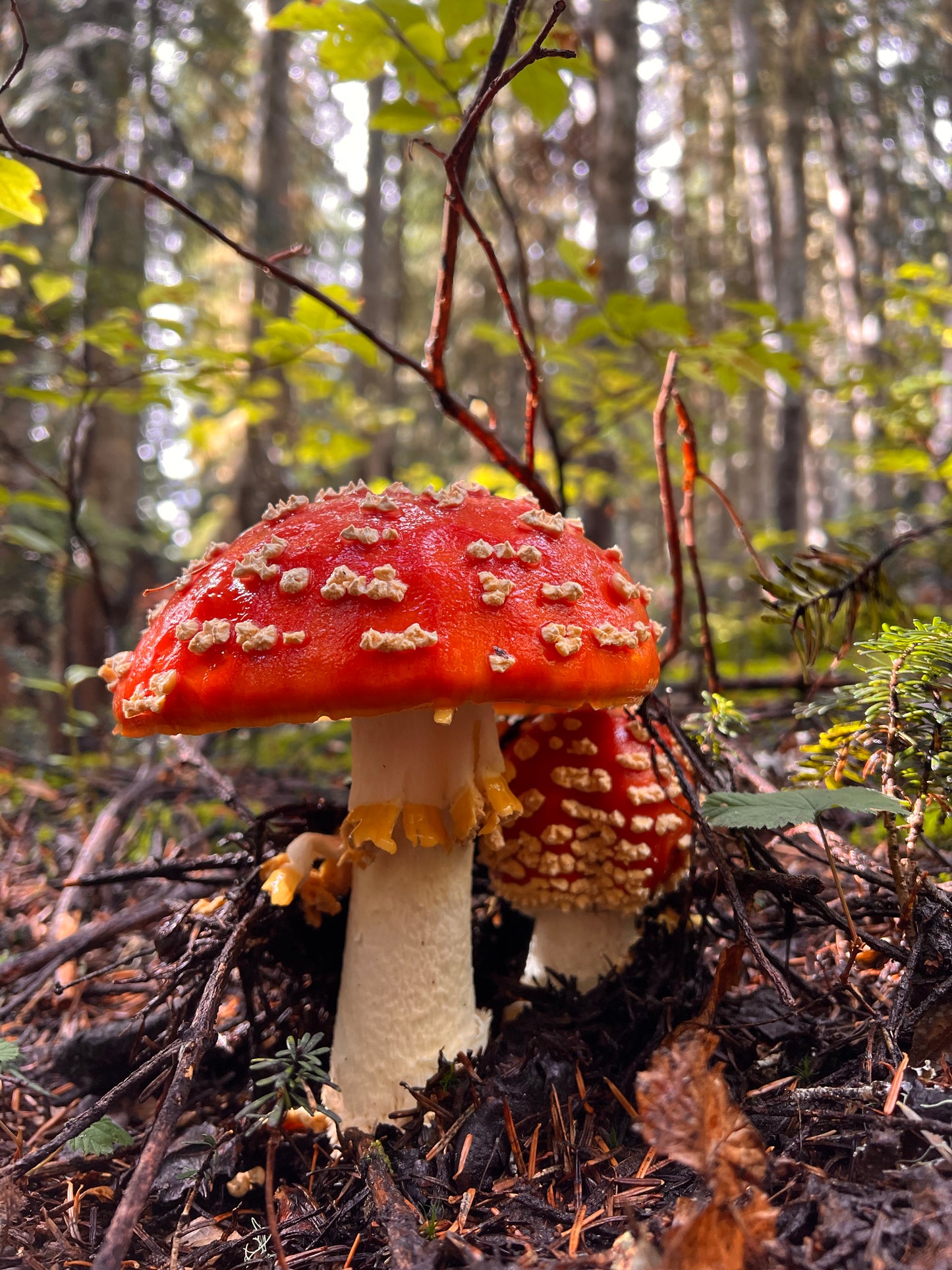
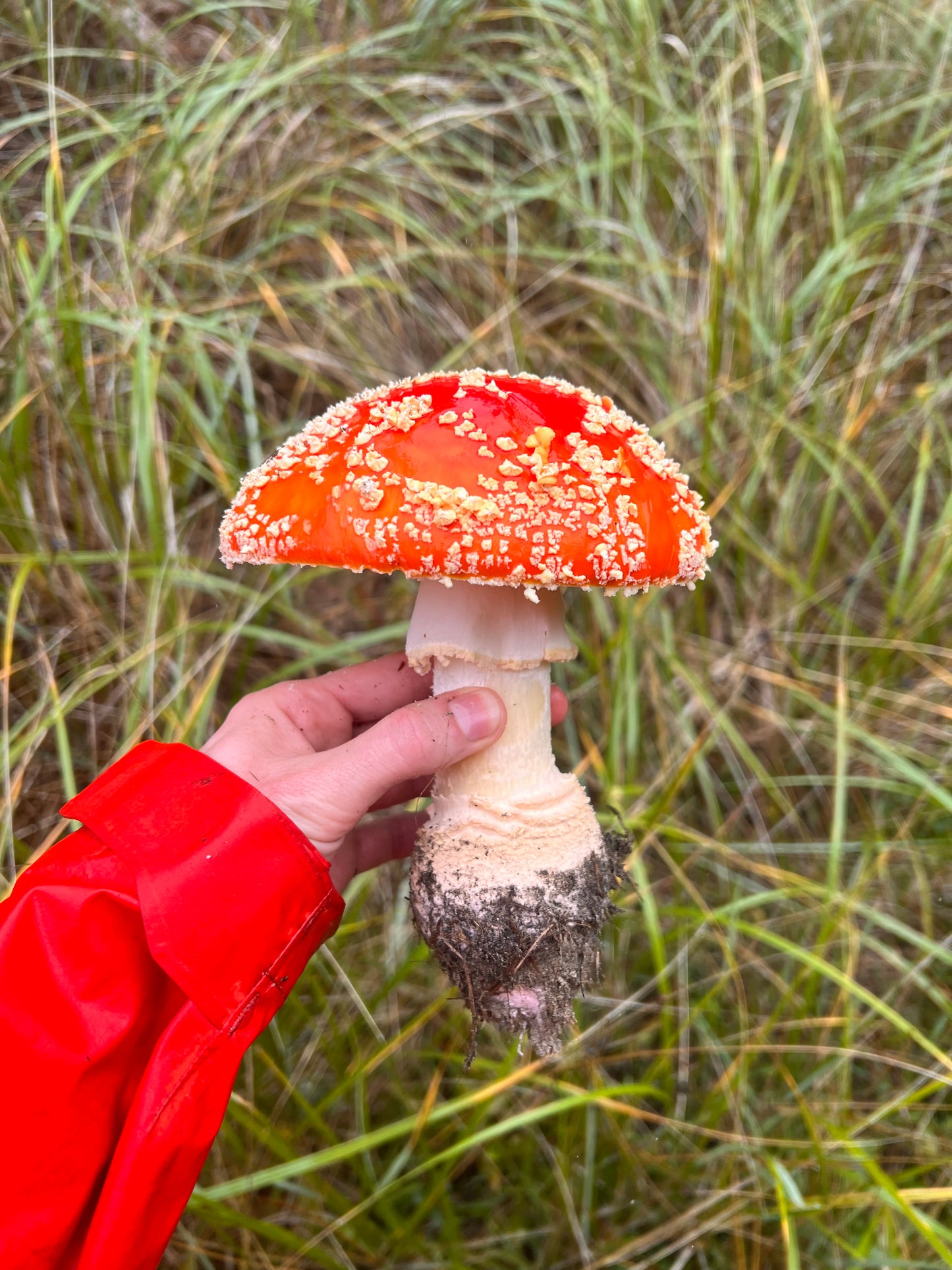
Before you begin the decarboxylation process, ensure you have correctly identified your specimen. If you are foraging your own, refer to our [Identification and Habitat Guide] to ensure you haven't picked a lookalike.
How to Decarboxylate Amanita Muscaria at Home
There are several methods, each with different levels of completeness and effort. All involve some combination of heat, acidity, or boiling. Remember you need to add energy or polar molecules to ibotenic acid to coerce it into releasing CO2.
Method 1: The Low pH Tea (Most Common)
The mostly commonly used method to decarb Amanita Muscaria is via a low pH bath or “tea”. This is the most widely used at-home decarboxylation method and gets closest to full conversion without specialized equipment.
- Dried Amanita muscaria caps
- Large pot
- kitchen scale
- Lemon juice or food-grade citric acid
- pH meter (~$15 on Amazon) or pH strips
- Cheesecloth or coffee filter for straining
- Ice cube trays for storage
Before you start, you'll want to determine how much mushroom weight you need based on your ice cube trays & potency desired. Ie: if you have 20 ice cube sections and you want to make doses that are 500mg each (the most common dosage) you'll want to use 10g of mushrooms (10g/20 sections = 0.5g per cube). If you want 250mg each, you'd use 5g.
- Weigh mushrooms: Weight out the amount of mushrooms you need based on your ice cube trays.
- Boil water: Bring a pot of water to a boil and add in your dried mushroom.
- Adjust ph: Add lemon juice or citric acid gradually until you reach a pH of 2.5–3.0, use your ph meter or strips to test.
- Simmer: Maintain a gentle boil at that pH level for 3+ hours, checking pH periodically and adjusting as needed
- Strain: Strain the liquid through cheesecloth to remove all mushroom material
-
Measure out: Let liquid cool and then pour into ice cube trays to freeze.
Tips:
- Use a large batch of mushrooms to average out potency variation (individual Amanita caps can vary by up to 5x in ibotenic acid/muscimol content)
- Use a specific amount of dried mushroom
- Keep a lid on the pot to reduce evaporation but watch that the boil stays gentle, not aggressive
- Your home will smell of sour mushrooms. This is unavoidable. I'd recommend you open windows and save it for a day you won't have house guests over (Trust me on that one)
Method 2: Low Heat Oven Method
Some practitioners use a low oven (around 200°F / 93°C) for 2 hours on dried, ground mushroom powder. This method achieves moderate decarboxylation without the acid bath and is simpler to execute. It does not reach the same conversion rates as the tea method but is a reasonable option for those who prefer not to work with pH adjustment.
Method 3: Lactobacillus Fermentation
A less commonly discussed method involves using a specific strain of lactobacillus bacteria that carries an enzyme capable of breaking down ibotenic acid. This is the method often referenced by companies that advertise “no heat, no acid” processing.
Worth knowing: lactobacillus does not need to be listed as an ingredient by law, and most companies using this method will not disclose it. If a seller claims their product is fully decarboxylated with no heat and no acid and offers no explanation of how, fermentation is likely how.
Why Potency Varies So Much Between Batches
Should everyone decarboxylate their own mushrooms?
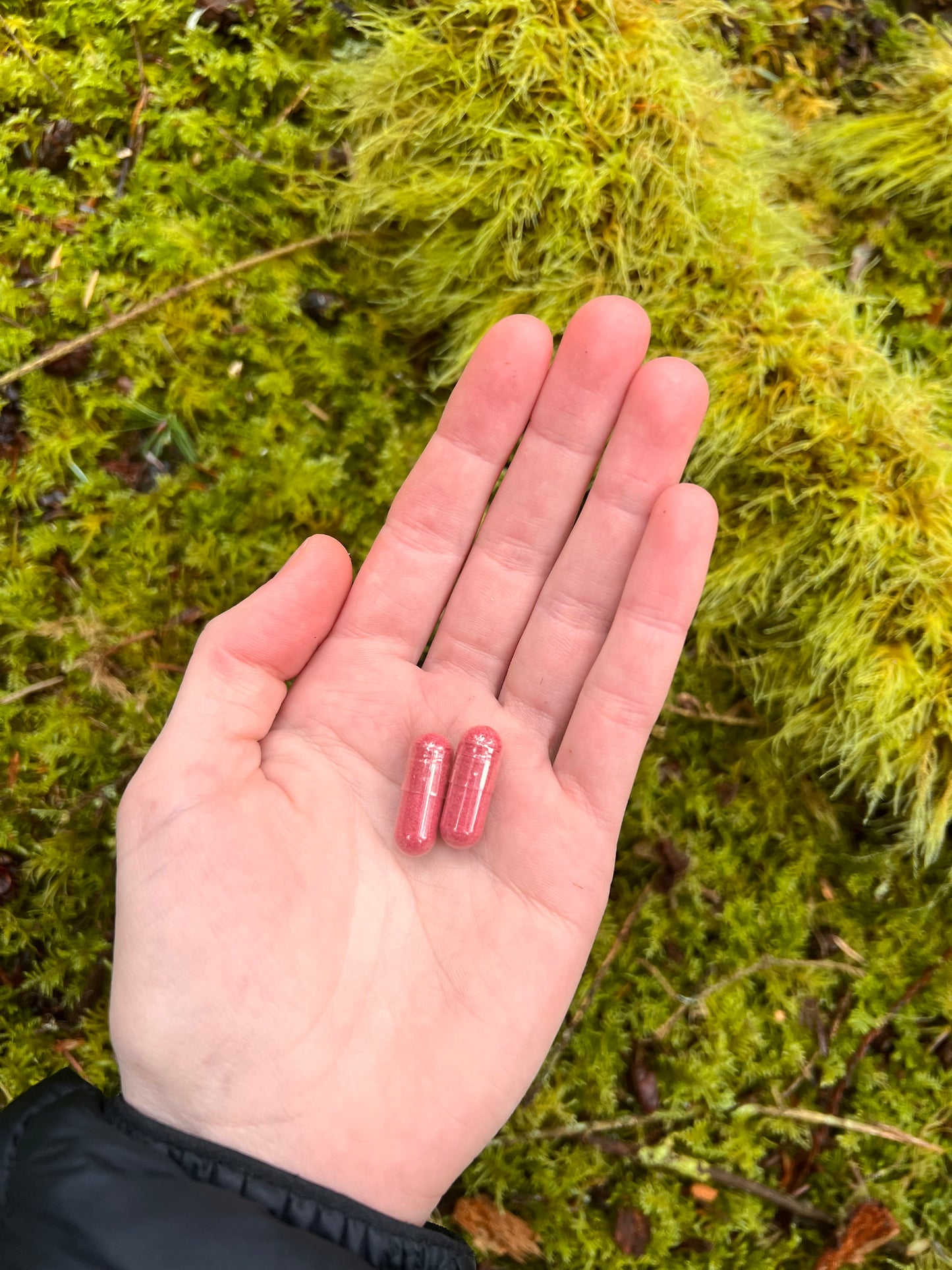
At Luminita, every capsule starts with hand-foraged Amanita muscaria from the old-growth forests of Washington State. Each batch is slowly decarboxylated using a precision process — not a kitchen approximation — and encapsulated at consistent doses so you know exactly what you’re working with every time.

Frequently Asked Questions
What is decarboxylation of Amanita muscaria?
Decarboxylation is the process of converting ibotenic acid into muscimol through heat, acidity, and time. It transforms Amanita muscaria from a potentially toxic mushroom into a potentially medicinal one by removing ibotenic acid, the compound responsible for nausea, agitation, and confusion.
Does drying Amanita muscaria decarboxylate it
Partially. Drying converts approximately 10-30% of the ibotenic acid into muscimol. It does not fully decarboxylate the mushroom. Any product described only as “dried” or “dehydrated” still contains a majority of ibotenic acid.
What temperature decarboxylates Amanita muscaria?
The acid tea method uses boiling water (~212°F / 100°C) with a pH of 2.5–3.0 maintained for 3+ hours. The dry oven method uses approximately 200°F (93°C) for 2 hours. Higher temperatures degrade muscimol.
How long does decarboxylation take?
The acid bath method requires 3+ hours of active boiling. Preparation and straining add another 30–60 minutes. Total time commitment is approximately 4–5 hours.
What does decarboxylated Amanita muscaria feel like vs. non-decarboxylated?
Fully decarboxylated Amanita produces calm, clear, grounded effects — reduced anxiety, quiet mind, improved sleep. Partially or non-decarboxylated Amanita is more likely to produce nausea, agitation, and confusion, especially at higher doses.
Can you over-decarboxylate Amanita muscaria?
Yes. Temperatures that are too high or cooking times that are too long will begin to degrade muscimol itself, reducing potency. This is the case for both the dehydration method or the boil method. It is also why precision matters, and why some sellers’ claims of “100% decarboxylation” using only a dehydrator are impossible.
Is decarboxylated Amanita muscaria safe?
Fully decarboxylated Amanita muscaria (which contains 90-100% muscimol) is considered non-toxic. Muscimol has an extensive research record and is not a scheduled substance in the US. Always start with a low dose, know your source, and read our [Drug Interactions & Contraindications Guide] before beginning.