
Updated: May, 2026
In This Lesson:
- Intro
- Genetic Origins
- Prehistoric Rock Art
- Siberia: The Most Documented Relationship
- How Amanita Muscaria Became Christmas
- Ancient India: Soma, Drink of the Gods
- Ancient Egypt: The Ankh & the Osirian Priest
- Celtic World: Druids & the Sacred Groves
- Norse World: Odin's Mushroom & The Berserkers
- Hidden in Christian Art
- Why Amanita was Suppressed and Forgotten
- Modern Renaissance
- Further Reading
Intro
The history of this mushroom is a history of humanity itself. Wherever humans settled, in forests cold enough to grow birch or pine, Amanita was there. And the evidence suggests we knew about it, worked with it, and revered it, long before any written record could capture why.
This is the real history of Amanita muscaria & humans, from as far back as we can go.
Biological Origins
Before we trace our human relationship with the Fly Agaric, we have to look at the long genetic history of the organism itself.
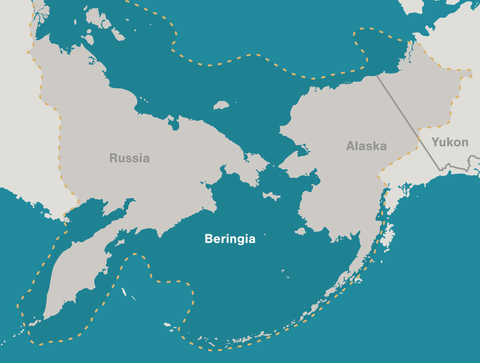
Evolutionary biologists have traced the first Amanita muscaria genetics to the Siberia-Beringian region about 3 million years ago. From there it spread in both directions. East across the Bering Straight into North and South America, and west across Europe, and eventually reaching every forested region on Earth.
credit: hakaimagazine
This ancient migration wasn't just a physical spread; it was a story of genetic divergence. A landmark 2006 molecular phylogenetic study led by mycologist József Geml identified three distinct genetic lineages (clades) within Amanita muscaria:
- The Eurasian Clade
- The Eurasian Subalpine Clade
- The North American Clade
Geml’s data highlighted Alaska as a critical historical center of diversification, a crucible where the mushroom adapted to the unique forest ecologies of the Pacific Northwest.
There is ongoing scientific debate about whether Amanita's spread across continents was assisted by human migration or occurred via natural spore dispersal. What is known is that distinct regional lineages developed on each continent, meaning the Amanita muscaria growing in Russia is genetically distinct from the ones growing in Washington State (even though both contain ibotenic acid and muscimol).
Their isolated evolutionary paths mean they offer slightly different "flavors" of somatic and spiritual experiences. They carry the energetic memory of the soil they adapted to.
Amanita has continued its travels through modern human activity, establishing itself in the Southern Hemisphere over the last two centuries via imported European pine and birch trees. Today, naturalized populations thrive in New Zealand, Australia, and parts of South America.
Fly Agaric in Prehistoric Rock Art
The earliest physical evidence of Amanita’s presence in the human timeline is difficult to pin down, partly because rock art and cave paintings are open to interpretation and partly because organic material (like mushroom bits) degrade easily.
What we do have is a body of rock art that shows up across continents, in Siberia, North Africa, Spain, India, and Australia, all depicting a spotted red mushroom, mushroom-headed figures, and human forms appearing to fly or float in the presence of fungi.
Here are the most significant sites:
Tassili n’Ajjer site in Algeria (7,000- 95,000 years old)
A UNESCO World Heritage site containing over 15,000 prehistoric paintings, includes humanoid forms with what appear to be mushroom shaped heads with red spots and some with mushrooms sprouting from their bodies.

Rock carvings along the Pegtymel River in the Arctic Circle show mushroom-headed figures that researchers believe to be representations of people while under the influence of Amanita muscaria.
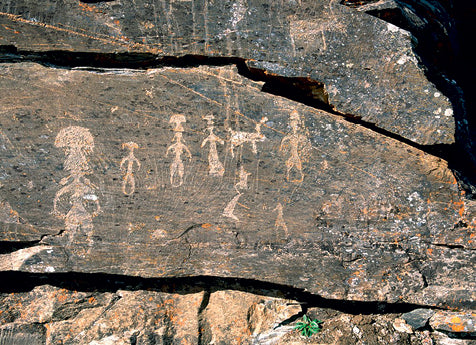
"Fly Agaric People"
Guatemala and southern Mexico Sites (around 3,000 years old)
On the other side of the world, in the pine and oak highlands of Guatemala, a completely separate culture was carving Amanita muscaria into stone. The most significant cache was found at Kaminaljuyú (a major city in the Mayan culture) where nine miniature mushroom stones were discovered in a ceremonial tomb, each paired with a grinding stone. Researchers believe the metates were used to grind sacred Amanita mushrooms into a powder for ceremonial consumption. The Quiché Maya even had a name for Amanita muscaria: cakulja ikox, the lightning mushroom because they seemed to show up after lightning storms.

These aren’t isolated incidents. The same spotted red mushroom shows up carved in stone and painted on cave walls in cultures that had no contact with each other. That’s not a coincidence. It means humans all around the world, throughout time, felt Amanita was so sacred it deserved to be immortalized in stone.
Siberia: The Most Documented Relationship
The Siberian shamanic traditions is the most well-preserved and widely studied thread of Amanita usage in human history.
Siberian shamans worked with Amanita muscaria as a central tool of their practice. They were often woman and deeply respected medicine keepers of their tribes. In autumn, they would harvest mushrooms and hang them above a fire to dry for several months, a process that we now understand as a form of decarboxylation, which detoxifies the mushroom and concentrates its effects. By winter solstice, the dried mushrooms were ready to consume.
The shaman would then prepare and drink a mushroom tea to reach an altered state where they could travel between worlds. In their journey they would bring back guidance, healing, and clarity for the tribe about the year ahead. This wasn’t recreational, it was the most serious work the community knew about and the shaman was the bridge.
Beyond ceremony and in later years, many Siberian tribes also used smaller doses of Amanita in everyday life, for focus, stamina, spiritual presence, and the ability to work long hours through the harshness of a northern winter.
The reindeer connection is real too. Reindeer in these regions were observed actively seeking out and eating Amanita muscaria. Shamans sometimes fed the mushroom to their reindeer and collected their urine afterwards, a practice that may seem strange until you understand that the reindeer’s body converts ibotenic acid to muscimol very efficiently, producing a safer, more concentrated medicine than the raw mushroom itself.
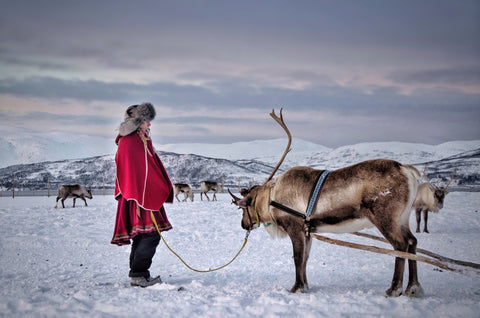
How Amanita Muscaria Became Christmas
The traditions of those Siberian winter ceremonies didn’t stay in Siberia, they were absorbed, repackaged, and handed down through generations in a form that most of the world still celebrates every December.

- Santa Claus replaced the shaman: red suit, white trim, the exact colors of the mushroom
- Flying reindeer come directly from the tradition of feeding Amanita to reindeer, and the flying sensation the mushroom produces at higher doses
- Santa through the chimney mirror the shaman's spirit body traveling though the yurt smoke hole at the top, a traditional ceremonial entrance.
- The Christmas tree is the pine or birch that Amanita grows beneath.
- Gifts placed beneath the tree echo the way Amanita fruits at the base of its host
You can now see that Christmas is a nearly complete map of a Siberian shamanic winter ceremony, preserved inside one of the most widespread cultural celebrations on Earth.
Ancient India: Soma, the Drink of the Gods
One of the most debated and fascinating threads in Amanita’s history is its possible connection to Soma, the sacred drink described extensively in the Rig Veda, one of the oldest spiritual texts in human history.
The Rig Veda, composed over 3,500 years ago, contains over a thousand hymns dedicated to Soma, a divine substance said to grant immortality, expand consciousness, connect the drinker to the gods, and produce states of ecstasy and poetic revelation. It was the centerpiece of Vedic religious ceremony. And yet, remarkably, the Vedas never clearly identify what Soma actually was. What they did describe was that it had no roots, no flowers, no seeds, and no cultivation. It was just a fleshy stalk pressed between stones, dried and soaked in water, and found primarily in the mountains.
In 1968, ethnomycologist R. Gordon Wasson published his landmark book Soma: Divine Mushroom of Immortality, making the case that Soma was Amanita muscaria.
His argument was meticulous: Amanita is leafless, has a fleshy stalk, grows at altitude in mountainous regions, and has documented use in Siberian shamanic traditions that share deep linguistic and cultural roots with ancient Vedic peoples. The preparation methods described in the Rig Veda, drying, soaking, pressing, mirror the methods used to prepare Amanita in Siberia.
Wasson's theory was that as the Vedic people migrated south and west into warmer climates where Amanita could no longer grow, and access to the original Soma was gradually lost. Substitutes were introduced (like psilocybin), and eventually the identity of the drink was forgotten entirely, leaving behind only the hymns.
Whether or not Soma was definitively Amanita, the parallels are striking enough that this theory remains one of the most compelling in the field of ethnomycology. The same mushroom that Siberian shamans were consuming in the Arctic may have been the divine drink at the heart of ancient Indian civilization.
Ancient Egypt: The Ankh & the Osirian Priests
This is the thread that gets me most excited, and it is one that most history of Amanita articles skip entirely.
In 1973, Puharich, a neurologist and researcher, made a remarkable discovery that he documented in his book The Sacred Mushroom: Key to the Door of Eternity. His research traced references to sacred mushroom use in ancient Egyptian spiritual texts, including the Pyramid Texts which were among the oldest religious writings ever found. They reference an unknown red and golden plant that was used in sacred rites iand described as the “food of the gods” and the “flesh of the gods.”
Puharich observed something that had been hiding in plain sight for millennia: the shape of Amanita muscaria during a specific stage of its growth (when the veil is still intact and the cap has not yet opened) closely resembles the Egyptian ankh. The symbol that has been interpreted for centuries simply as a symbol of life may have carried a far more specific meaning: access to the divine through the sacred mushroom.

The Osirian priest class of ancient Egypt is particularly interesting in this context. Scholars including those publishing in archaeological journals have proposed that the tekenu ceremony, a ritual rebirth ceremony in the Osirian tradition, involved the priest taking on the identity of the mushroom deity, consuming Amanita as part of the rite, and conducting the ceremony known as the Opening of the Mouth from a state of expanded consciousness. The Osirian priests wore bull skins in ceremony, and researchers have connected this to Amanita’s mycological characteristics — its red and white coloring and properties were associated with the bull as a symbol of strength and divine power.
The Egyptian priests were also documented using other visionary medicines alongside these practices, most notably the Blue Lotus, which produces its own dreaming, dissociative effects. They understood expanded states of consciousness as tools of spiritual access, not as aberrations. In that framework, Amanita’s role as a gateway to the unseen makes perfect sense.
The Celtic World: Druids & the Sacred Grove
Celtic druids are documented as working with Amanita muscaria long before Christianity arrived in Europe. They found her growing at the base of sacred oaks, birches, and conifers, the very trees their spiritual practice revered.
For the druids, Amanita represented a direct line to ancient wisdom, to the cosmos, and to the ancestors. Celtic myths consistently portray the mushroom as a symbol of renewal, rebirth, and hidden knowledge. Irish folklore in particular carries her fingerprints. Images of the fairy world, the thin places where the veil between realms grows transparent, were often described in terms that align closely with what we now know muscimol can open in consciousness.
In German and Northern European folk traditions, Amanita became associated with good luck and fortune, a symbol that persisted long after its ceremonial use was suppressed. The tradition of depicting Amanita alongside chimneys, chimney sweeps, and four-leaf clovers as New Year’s talismans of prosperity survived in Germany well into the modern era, a cultural echo of something much older.
The Norse World: Odin’s Mushroom & the Berserkers
Amanita’s presence in Norse culture is woven through both mythology and the history of the most famous warriors in the Viking world: The berserkers.
The berserkers were an elite class of Norse warriors who fought in a state of what the sagas described as a trance-like fury, called the berserkergangr, which made them appear almost invincible. They howled, bit their shields, seemed immune to pain, and exhibited ferocity that their opponents found genuinely terrifying. When the trance spent itself, they were left in a state of exhaustion and deep fatigue for days.
Since the late 18th century, historians have fiercely debated whether the Berserkers used Amanita muscaria to trigger these states. The mushroom was highly abundant across Scandinavia, and its dual-phase pharmacology aligns perfectly with the sagas:
- An initial phase of heightened physical energy, muscle twitch responsiveness, and a total dampening of pain receptors (driven by muscimol and residual ibotenic acid).
- Followed inevitably by a heavy, restorative, deep-sleep phase as the nervous system fully yields to the GABAergic slow-wave state.

In Norse mythology, Amanita’s red cap was connected to Odin, the god of wisdom, war, poetry, and altered states, and the mushroom appears in Norse artistic traditions as a symbol of transformation and divine contact. The connection to the bear cult, the animal skins worn in ceremony, and the mirroring of Siberian shamanic practices all point in the same direction.
While some scholars argue for alternative plant catalysts, it is highly probable that the Berserkers utilized a carefully guarded blend. Amanita was likely the core component providing the endurance, pain management, and raw, single-pointed focus required to cross the threshold into battle without fear, while another ingredient caused their increased ferocity and euphoria.
Hidden in Christian Art: The Secret That Survived
One of the most quietly astonishing threads in Amanita’s history is how it survived the suppression of European pagan and shamanic traditions by appearing in plain sight, encoded into the art of the very institution that sought to erase it.
John Marco Allegro, a scholar of the Dead Sea Scrolls, was a big proponent of this theory. In his book 1970 book The Sacred Mushroom and the Cross, arguing that the earliest roots of Christianity were intertwined with sacred mushroom cult practices. His theory was controversial and largely dismissed at the time, though it has found more serious attention in recent decades.
What is harder to dismiss is the physical evidence in medieval Christian art. Carl Ruck, a professor at Boston University, spent decades documenting depictions of what appear to be Amanita muscaria concealed within religious imagery. He noted Amanita symbolism in frescoes, illuminated manuscripts, and chapel murals across Europe.
The best depiction is in the Plaincourault Chapel fresco in France, painted in the 12th century. It depicts the Tree of Knowledge of Good and Evil in the Garden of Eden with a form that bears a striking resemblance to a large Amanita muscaria, its spotted cap unmistakable to anyone familiar with the mushroom.

Whether these artists were preserving knowledge of a sacred tradition or simply depicting familiar forest imagery is a question that may never be fully resolved. But the frequency of these appearances, across cultures and centuries, suggests that the memory of Amanita as something sacred never entirely disappeared, it was just pushed underground.
The Great Amnesia: Suppression and the "Poison" Myth
The suppression of Amanita’s use followed a familiar historical pattern. As Christianity spread through Northern Europe and into Siberia and Central Asia, practices involving psychoactive plants and fungi were systematically dismantled. Shamans were targeted, sacred ceremonies were banned and the knowledge of how to properly prepare the mushroom (the decarboxylation the sacred relationship) the processing, was lost with the people who carried it.
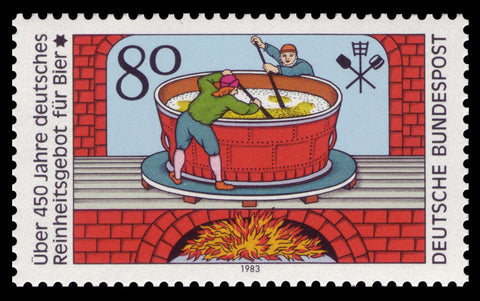
The 1516 Beer Purity Law in Germany, the Reinheitsgebot, provides a specific and concrete example of this erasure. Before this law, Amanita was commonly used as an ingredient in the wintertime beers of Northern Europe, contributing its GABAergic effects to the already relaxing effect of alcohol. The law banned it, allowing only water, barley, and hops, and with that, one of the most accessible forms of Amanita’s cultural persistence was made illegal.
As the preparation knowledge disappeared, those who stumbled upon Amanita without guidance consumed it raw, experienced the unpleasant effects of ibotenic acid, and the mushroom’s reputation transformed from sacred medicine to toxic toadstool. That reputation is what most of us inherited. It was passed down through mycology textbooks, cautionary tales, and a cultural amnesia so thorough that even the word “toadstool” or "poison" came to evoke this mushroom.
The Modern Amanita Muscaria Revival
In the past 50 years, a small number of researchers, ethnomycologists, foragers and practitioners have begun the work of recovering what was lost.
R. Gordon Wasson’s work on Soma opened the door. Andrija Puharich’s research into the Egyptian connection followed. John Allegro and Carl Ruck mapped the European threads. And in the last decade, as the broader cultural conversation around plant medicine has opened, ordinary people have begun rediscovering Amanita as a mental health medicine.
Though much of our history with Amanita has been lost with time, one thing is for sure: our mycelial ties with Amanita run deep, we just need to rebuild the relationship.
Further Reading
- The Sacred Mushroom: Key to the Door of Eternity by Andrija Puharich
- Soma: Divine Mushroom of Immortality by R. Gordon Wasson
- The Sacred Mushroom and the Cross by John Marco Allegro