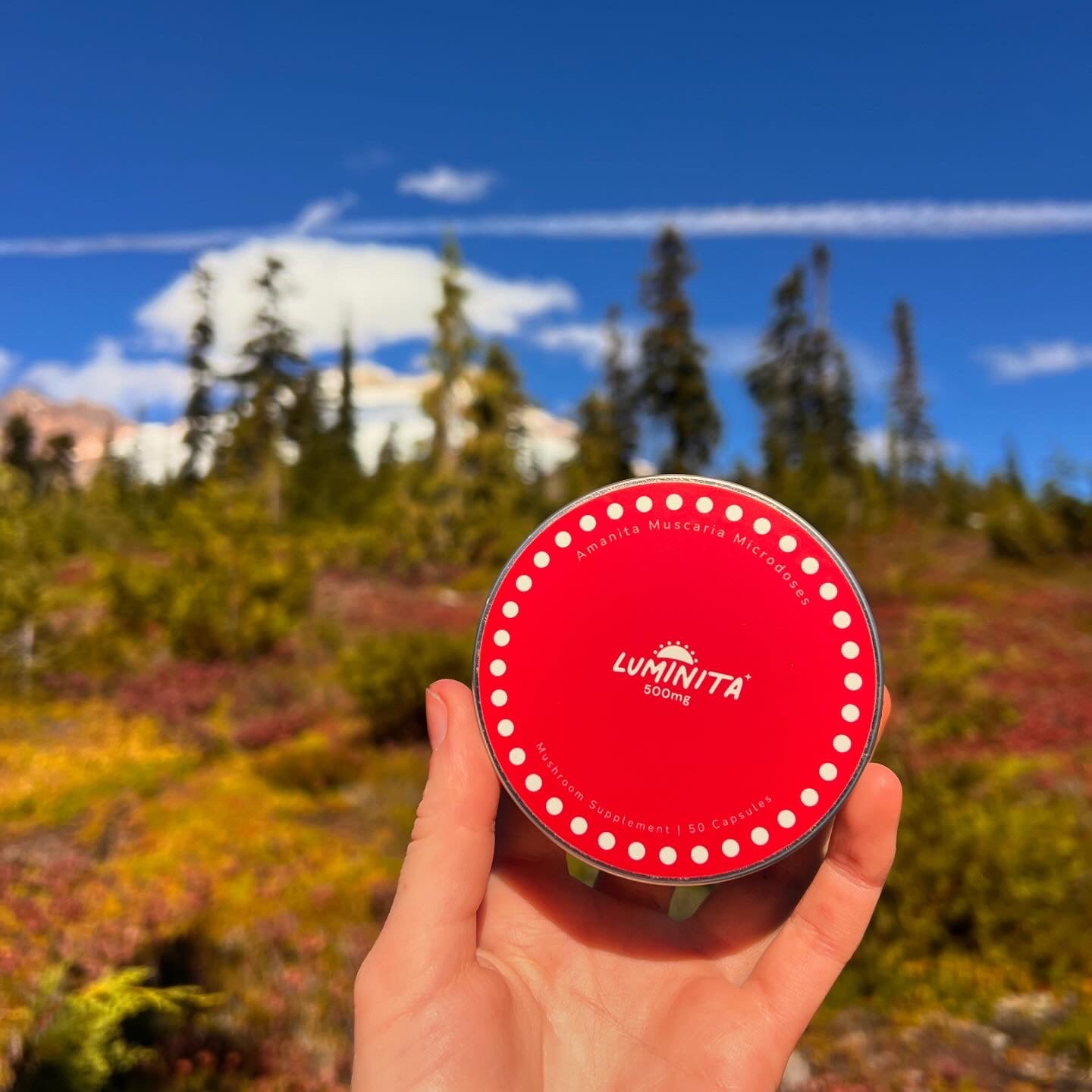

Updated May, 2026
In This Lesson
- The Big Question: Does Amanita muscaria always cause nausea?
- Cause 1: Ibotenic Acid (The Neuro-Excitatory Precursor)
- Cause 2: Chitin (The Indigestible Mushroom Cell Wall)
- Cause 3: Muscarine (The Cholinergic Trigger)
- Cause 4: Your Dose is Too High
- Cause 5: You Redosed Too Early
- The Protocol: How to Avoid Nausea Completely
- In the Moment: Still Feeling Nauseous?
- FAQs
Amanita muscaria holds a complicated space in modern herbalism. Search online, and you are quickly met with a polarizing wall of text: intense warnings of toxicity on one side, and glowing reviews of deep, restorative calm on the other. At the center of this confusion is almost always a single, uncomfortable symptom: nausea.
But as a forager who works with this mushroom in its entirety (from the forest floor to the final preparation), I want to share a foundational truth that is often lost in online forums: nausea from Fly Agaric is completely preventable. In the vast majority of cases, digestive upset traces back to specific, identifiable chemical and physical triggers, all of which are completely avoidable once you understand the biochemistry at play.
💡 Feeling nauseous right now? > If you've already taken Amanita and are feeling sick, don't panic. For most people, the discomfort peaks and passes within 15 to 60 minutes. Lay down in a quiet space, sip warm ginger tea or cold water slowly, and avoid eating a heavy meal. Read below to find out why this happened and how to prevent it next time.
Does Amanita Muscaria Always Cause Nausea?
The short answer is no. Amanita muscaria does not inherently cause nausea. When you work with a properly prepared extract at a moderate, calibrated dose, most people experience no physical discomfort at all.
The mushroom's reputation for causing stomach upset stems almost entirely from poor preparation or hasty practices: consuming raw caps, using incomplete decarboxylation methods, taking an excessive dose, or redosing before the first serving has fully settled. When respect is paid to proper processing and measured dosing, Fly Agaric is exceptionally well-tolerated by the vast majority of people.
Below, I've listed out the five main causes of nausea and how to prevent it.
Cause 1: Ibotenic Acid: The Neuro-Excitatory Precursor
This is the most crucial compound to understand, as it is the primary catalyst for the vast majority of uncomfortable Amanita experiences.
In its wild, fresh state, Amanita muscaria contains high concentrations of ibotenic acid, a raw precursor compound structurally similar to glutamate, the brain's primary excitatory neurotransmitter. Because it mimics glutamate, ingesting raw or inadequately dried mushrooms overstimulates the nervous system, which the body registers as physical distress and triggers nausea, stomach cramping, muscle twitching, and mental confusion. (It is a common misconception that simple dehydration completely fixes this, as standard low-heat drying often leaves up to 80% of the ibotenic acid intact.)
The Solution:
The good news is that ibotenic acid converts to muscimol through a process called decarboxylation. Through precise exposure to heat and acidity, the carboxyl group is stripped away, converting the excitatory ibotenic acid into muscimol. Muscimol is a deeply calming, GABAergic compound that interacts smoothly with the nervous system and is responsible for the mushroom’s therapeutic, ego-quieting benefits. Because muscimol acts on entirely different pathways, it is fundamentally non-emetic and does not typically cause nausea.
Read the full decarboxylation guide here →
To completely bypass this cause of nausea, ensure you only work with fully decarboxylated Amanita muscaria extracts, specifically products that have undergone a prolonged low-pH simmer or a lactobacillus based fermentation.

Cause 2: Chitin: The Indigestible Mushroom Cell Wall
Less well known but equally significant, especially for people with sensitive digestion.
Chitin is the primary structural component of fungal cell walls. It is a tough, fibrous polysaccharide that is notoriously difficult for the human digestive tract to dismantle. Because mushrooms are no longer a major staple of the modern everyday diet, most people produce very little chitinase, the specific enzyme required to break down this rugged fiber. When a concentrated amount of fungal material enters the our digestive systems, the stomach struggles, often resulting in bloating, cramping, and nausea. Think of it as the mushroom world's equivalent to lactose intolerance.
This is why whole dried mushroom caps, even properly decarboxylated ones, can still cause stomach upset in sensitive people. The ibotenic acid may be completely converted, but the physical, indigestible chitin remains entirely intact.
The Solution:
Opt for a cleanly extracted, liquid (or water-soluble) product where the active compounds have been physically separated from the mushroom’s cell walls. In a premium capsule extract, tea, or tincture, the heavy chitin fibers have been filtered out, leaving the pure, bioavailable molecules. It allows your nervous system to receive the benefits without forcing your stomach to do the heavy lifting.
Cause 3: Muscarine: The Cholinergic Trigger
Muscarine is a third compound present in small amounts in Amanita muscaria that often goes unmentioned in nausea discussions.
Unlike ibotenic acid & muscimol, muscarine does not interact with your glutamate or GABA pathways. Instead, it acts on the cholinergic system—specifically binding to muscarinic acetylcholine receptors, which help govern smooth muscle function, saliva production, and autonomic digestive activity.
In the tiny quantities typically found in an Amanita cap, most people will never notice its presence. However, for highly sensitive individuals or when consuming larger doses, muscarine can contribute to digestive hyper-activity, increased salivation, and mild nausea, completely independent of ibotenic acid.
The Solution:
Because muscarine is a stable molecule, it cannot be broken down or removed through standard decarboxylation. Fortunately, the solution is simple: calibration and timing. When working with a true, precise micro or mini dose, the muscarine content is simply too low to trigger a physical response. If you find yourself experiencing mild stomach warmth or watering mouth even with a fully decarboxylated extract, you are likely just sensitive to this minor compound. The remedy is to gently lower your serving size and ensure you eat a light, grounding meal 30 minutes before your protocol.
Cause 4: Your Amanita Dose is Too High
This is perhaps the most straightforward cause of nausea, yet it is often the most commonly overlooked.
Nausea begins to emerge when the total dose of muscimol exceeds what the body can process comfortably. For most people working with a decarboxylated extract, this threshold sits somewhere above 3 grams of dried mushroom equivalent, though sensitivity varies. What feels like a manageable dose to one person can feel like too much for another.
The Solution:
If you are experiencing stomach pain with a high-quality product, and you’ve already ruled out chitin or raw ibotenic acid, your body is likely just asking for a smaller serving.
Drop your dose back by 0.25 grams and stay there for three to five days to reassess. Amanita is not a mushroom that rewards pushing through discomfort. She rewards patience, listening, and gentle calibration.
Cause 5: You Redosed Too Early
If you spend any time browsing online forums, you will quickly realize that premature redosing is the undisputed culprit behind the vast majority of overwhelming Amanita experiences.
Amanita muscaria operates on a much slower onset timeline than most people expect. Depending on your individual metabolism and what you’ve eaten, the onset typically takes anywhere from 45 to 90 minutes. This slow, quiet climb regularly tricks people into assuming their initial serving didn't work, prompting them to reach for a second dose just as the first one is finally preparing to land.
When both doses come on together, the combined effect is significantly stronger than either alone, and nausea is one of the first signs that the total dose has exceeded your body's comfort threshold.
The Solution:
Never introduce a second serving until a full 90 minutes have passed. If that window closes and you genuinely feel that your initial calibration missed the mark, a conservative half-dose is appropriate to gently build the bridge—never a full second dose.
The Protocol: How to Avoid Nausea Completely
With all five causes in mind, here is the practical checklist:
- Work with a fully decarboxylated extract. This addresses ibotenic acid and chitin simultaneously. It is the single most impactful step you can take.
- Start low. This is the ideal starting point for most people. You can always increase your serving later, but you cannot un-take a dose that was too high.
- Take it after a light meal. Think of it like taking a vitamin on an empty stomach, having a small buffer can make all the difference. Taking Amanita on a completely empty stomach speeds onset and increases nausea risk.
- Wait a full 90 minutes before considering a redose. Slow onset is normal. It does not mean the dose was insufficient.
- Stay well hydrated. Amanita can be mildly dehydrating. Two extra glasses of water reduces the likelihood of any discomfort.
- Try ginger tea. Widely used in the Amanita community as a gentle nausea preventative, ginger tea taken 20 to 30 minutes before dosing or alongside your capsule can settle the stomach noticeably. Ginger root’s active compounds are well-documented for their antiemetic properties and cooperate beautifully with Amanita.
- Source carefully. Preparation quality varies enormously between producers. A product made from properly foraged, fully decarboxylated, blended mushrooms will behave very differently from something casually dried and capsulated. Know where your product comes from and how it was processed.

In the Moment: Still Feeling Nauseous?
If you are reading this while actively experiencing discomfort (whether you are adjusting to your first few days of a new protocol or accidentally over-calibrated), there is no need to worry.
First, know that you are safe. This physical tension is a temporary response as your system processes the mushroom's compounds. It is not permanent, and it typically peaks and fully resolves within 15 to 60 minutes.
Here is what helps:
- Find stillness: Lie down in a comfortable, quiet space, close your eyes, and let the wave pass. Amanita often offers the invitation to slow down and allow yourself to rest.
- Sip Tea: Slowly sip warm ginger tea or cold water. Avoid drinking large amounts quickly, which can stretch an already sensitive stomach.
- Take a gentle buffer: Do not eat a heavy or complex meal right now. However, if your stomach feels hollow or acidic, a small, plain snack like a few crackers or a small serving of plain white rice can help absorb excess acid and settle your digestion.
- Vomit, if necessary: If you took a large dose of Amanita (over 7 grams), and are experiencing intense nausea, it's often a sign that your body is overwhelmed and wants to remove the excess mushroom. Allow your body to naturally purge this material (if needed) to prevent any unnecessarily trying experience.
For your next session, treat this as a helpful data point from your body. Simply reduce your serving size by half, ensure you have a light meal thirty minutes beforehand, and bring a cup of ginger tea, if desired, into your ritual from the start.
A Final Note
Ultimately, everyone is a unique, and you won't fully know how Amanita muscaria interacts with your system until you experience it for yourself. But by honoring the chemistry of the mushroom, working exclusively with a fully decarboxylated, clean water extract, keeping doses low and introducing a light meal beforehand, you can virtually eliminate the risk of digestive distress.
In the five years I have spent sourcing, processing, and sharing properly prepared Amanita extracts, I have yet to have a single person report back with nausea. I treat the processing of this beautiful mushroom with absolute reverence because physical comfort is the foundational doorway to mental stillness.
If you have been hesitant to explore Amanita due to fear of stomach upset, or if you are ready to transition away from raw caps to a precisely calibrated, chitin-free experience, I invite you to explore our classroom-tested formulations.
-------
FAQs
Does Amanita muscaria always cause nausea?
No. At a true microdose using a properly extracted, decarboxylated product, nausea is uncommon. Most nausea experiences trace back to residual ibotenic acid, chitin from whole dried caps, a dose that is too high, or redosing before the first dose has had time to come on fully.
What is the main cause of nausea from Amanita muscaria?
Ibotenic acid, the raw compound found in insufficiently processed Amanita, is the primary culprit in most cases. It is neurotoxic at higher concentrations and the body cannot typically handle large doses of it. Proper decarboxylation converts it to muscimol, which does not cause nausea.
How long does Amanita muscaria nausea last?
Typically, acute nausea or stomach upset resolves within 15 to 60 minutes as the body processes the compounds
Does boiling Amanita muscaria prevent nausea?
Partially. Boiling in a low-pH liquid converts ibotenic acid to muscimol, which significantly reduces nausea. Additionally, straining out the physical mushroom material to remove chitin is also required for sensitive stomachs.
What is chitin and why does it cause nausea?
Chitin is the structural component of mushroom cell walls. Most modern people produce very little of the enzyme required to digest it, which can cause bloating, cramping, and nausea when consuming whole mushroom material. An extracted product removes chitin from the equation entirely.
Can I take Amanita on an empty stomach?
Most people can tolerate it, but taking Amanita on an empty stomach speeds up onset and increases nausea risk for sensitive individuals. Thirty minutes after a light meal is the recommended approach if you notice any digestive discomfort.
Is nausea from Amanita dangerous?
At a true microdose, nausea is uncomfortable but not dangerous and typically resolves within one to two hours. Rest and hydration are sufficient.
At higher doses the picture is different. Nausea at a larger dose can be an early signal that ibotenic acid levels are significant, and it often precedes more intense effects including confusion, disorientation, and vomiting. If you are working with larger amounts and experience nausea alongside any symptoms such as confusion, agitation, difficulty standing, or extreme sedation, do not be alone. Have a trusted person with you, stay hydrated, and if symptoms feel severe or are escalating rather than passing, go to a local urgent care or hospital.
What helps with Amanita nausea in the moment?
Sip on some ginger tea, lie down in a quiet space, drink cold water, or wait it out. The nausea typically passes within 30 to 60 minutes. Do not redose.